
 EN
EN



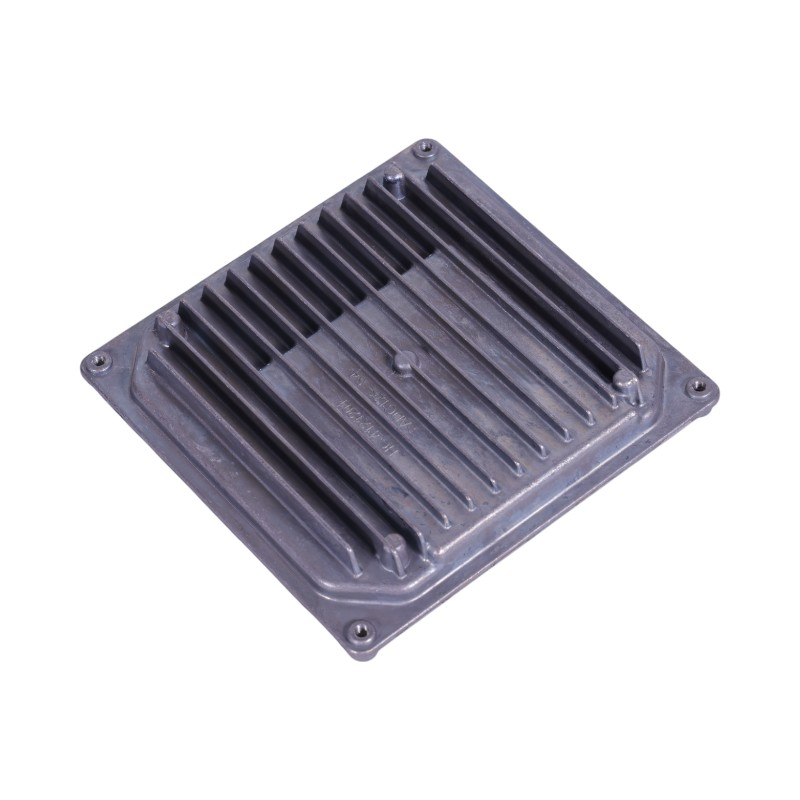
Precision Process Control for High-Volume Die Casting Consistency
Real-Time Monitoring of Temperature, Pressure, and Cycle Timing
Continuous sensor-based tracking of molten metal temperature (±2°C tolerance), injection pressure (500–1,500 bar), and cycle timing (0.5–5 sec accuracy) prevents cold shuts, gas porosity, and other volume-sensitive defects. Advanced systems trigger automated adjustments—such as compensating for thermal drift during extended runs—when deviations exceed pre-set thresholds. This real-time oversight ensures each casting cycle replicates optimal conditions, reducing scrap rates by 12–18% in high-output environments according to industry benchmarks.
Statistical Process Control (SPC) to Maintain Shot-to-Shot Uniformity
Statistical Process Control (SPC) uses data analytics to validate consistency across thousands of casting cycles, employing control charts to monitor fill velocity, solidification time, and other critical variables. By targeting process capability indices (e.g., CpK ≥1.33), die casting factories ensure 99.7% of components fall within six-sigma tolerance bands—minimizing dimensional variation before it impacts downstream assembly. SPC detects subtle shifts from tool wear or material inconsistency early, enabling predictive corrections instead of reactive inspection.
Robust Tooling Management: Mold Longevity and Thermal Stability
Preventive Mold Maintenance and Integrity Verification Protocols
Preventive maintenance is foundational to mold longevity and batch consistency. Scheduled inspections use non-destructive testing—dye penetrant and ultrasonic scans—to detect micro-cracks early, cutting unplanned downtime by up to 50% in optimized systems (Industry Benchmark, 2023). Cyclical pressure testing confirms structural integrity before each run, while embedded sensors monitor wear at critical points to enable predictive interventions. Standardized handling—such as cushioned lifting tools—prevents physical damage during mold changes. Together, these protocols sustain shot-to-shot uniformity and support defect rates below 0.5% in large-batch production.
Thermal Mapping for Uniform Cooling and Solidification Across Batches
Thermal mapping uses embedded mold sensors to track surface temperature variations in real time, identifying hot spots or cooling imbalances that cause shrinkage or misruns. Engineers adjust cooling channel flow dynamically—and apply conformal cooling where appropriate—to ensure uniform heat dissipation and solidification. This approach improves part yield by over 15% (Materials Science Review, 2024) and delivers tighter dimensional tolerances, even for complex geometries, without increasing cycle time.
Proactive Defect Prevention and Closed-Loop Quality Assurance
Root-Cause Mitigation of Porosity, Shrinkage, and Misruns
Top-tier die casting factories eliminate flaws through systematic root-cause analysis—not just detection. Porosity is addressed via real-time cavity pressure monitoring and vacuum-assisted casting; shrinkage is mitigated by thermal mapping–guided cooling optimization; and misruns are prevented by validating gate velocities and alloy temperatures using digital simulation. Closed-loop systems automatically flag anomalies—like viscosity shifts in molten aluminum—and initiate recalibrations before defects propagate. One manufacturer reduced warranty claims by 58% after deploying sensor-based porosity detection during solidification—turning defect data into continuous process refinement.
Material Traceability and Dimensional Verification from Alloy to Finished Part
Incoming Alloy Validation via Spectrometry and Full Lot Traceability
Quality assurance begins with raw material. Every incoming aluminum or zinc alloy batch undergoes Positive Material Identification (PMI) spectrometry to verify composition against ASTM and EN standards. Each heat receives a unique identifier and full digital traceability through EN 10204 3.1 certificates—creating an unbroken chain from melt shop to finished component. When issues arise, affected lots can be isolated in minutes, preventing systemic failures. Leading facilities augment this with blockchain-ledger integration for real-time, auditable validation across 100% of high-volume orders.
CMM-Based Final Inspection and Statistical Tolerance Compliance Reporting
Final verification relies on Coordinate Measuring Machines (CMM) with micron-level precision. These systems scan 20+ critical dimensions per part—including wall thickness, draft angles, and mating surfaces—against CAD models. Integrated SPC software analyzes tolerance compliance across entire batches, flagging deviations exceeding ±0.05mm. Reports highlight emerging trends—such as progressive tool wear or thermal drift—enabling corrective action before non-conformities occur. This dual-layer verification ensures dimensional stability across 50,000-unit runs and delivers fully auditable quality documentation.
FAQ
What are the critical factors in high-volume die casting consistency?
The critical factors in high-volume die casting consistency include real-time monitoring of molten metal temperature, injection pressure, and cycle timing. Additionally, the implementation of Statistical Process Control (SPC) helps maintain uniform quality by addressing aspects like fill velocity and solidification time.
How does robust tooling management contribute to mold longevity?
Robust tooling management, which includes preventive mold maintenance and thermal stability protocols, ensures mold longevity. This involves non-destructive testing to detect micro-cracks, cyclical pressure testing for structural integrity, and standardized handling to prevent physical damage.
What methods are used for proactive defect prevention?
Proactive defect prevention uses systematic root-cause analysis to eliminate flaws such as porosity, shrinkage, and misruns. Techniques include real-time cavity pressure monitoring, vacuum-assisted casting, and thermal mapping-guided cooling optimization.
How is material traceability maintained from alloy to finished part?
Material traceability is maintained through spectrometry for alloy validation and full digital traceability using unique identifiers. This allows for immediate isolation of affected lots if issues arise, further enhanced with blockchain-ledger integration for real-time validation.
What role does CMM-based inspection play in quality assurance?
CMM-based inspection, using Coordinate Measuring Machines, ensures final dimensional verification of parts. It analyzes over 20 critical dimensions per part and uses SPC software to maintain compliance within set tolerances, ensuring high precision and quality documentation for large production batches.