
 EN
EN


Precision Engineering: Why Sub-0.05 mm Tolerances Define a Top-Tier Die Casting Factory
How Tight Dimensional Control Enables High-Value OEM Partnerships
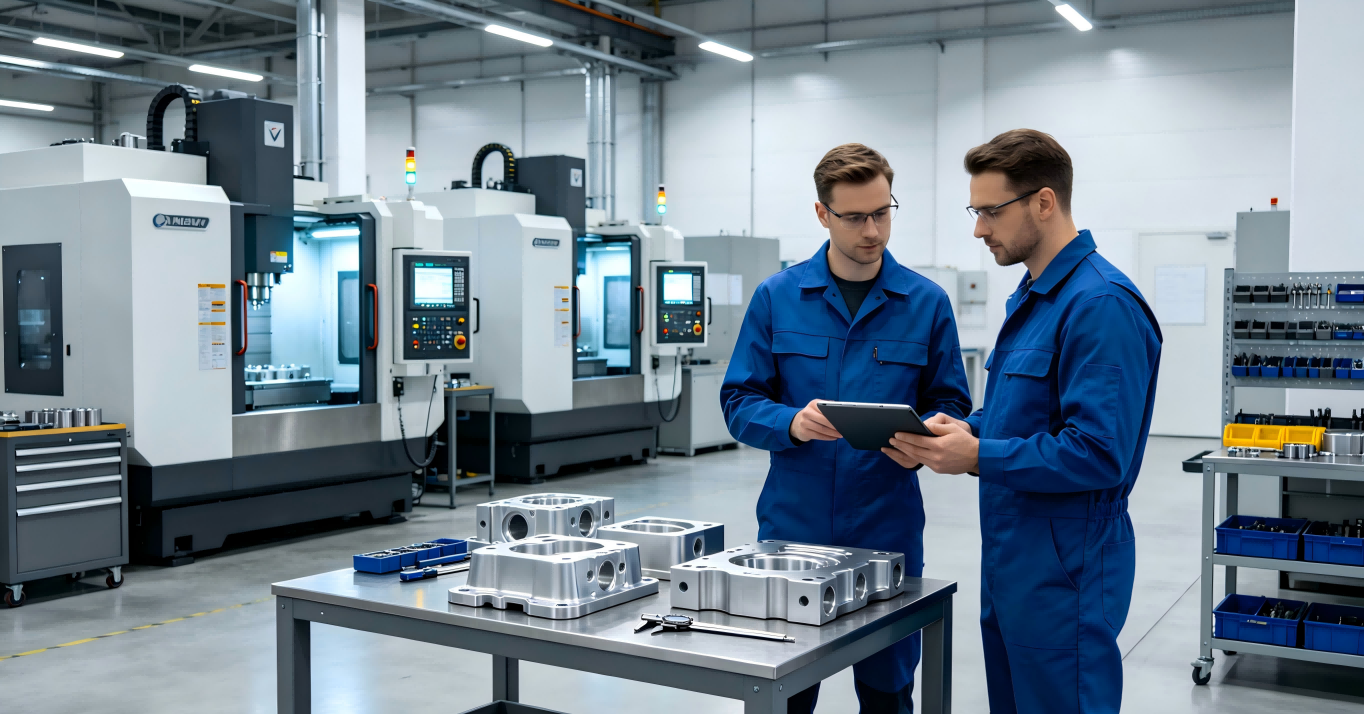
Maintaining sub-0.05 mm tolerances separates elite die casting factories from competitors—enabling trusted partnerships with aerospace, medical device, and premium automotive OEMs. These industries require dimensional deviations under ±0.05 mm for critical components to ensure seamless assembly integration and eliminate costly post-casting machining (Frigate.ai 2024). Achieving this level of control demands integrated CNC calibration, real-time CMM validation, and closed-loop process feedback—reducing dimensional errors by 78% compared to standard facilities. The result is predictable just-in-time delivery with near-zero fitment failures and full compliance with AS9100 and ISO 13485 requirements.
Surface Quality Consistency Across Half a Million+ Production Shots
Top-tier factories sustain surface finish uniformity below Ra 1.6 μm across production runs exceeding 500,000 shots—a benchmark enabled by proprietary die maintenance protocols and AI-driven thermal monitoring. This consistency delivers three key advantages:
- Elimination of secondary polishing for 92% of components
- Corrosion resistance improvements exceeding industry standards by 40%
- Visual defect rates below 0.3% after 500,000 cycles
Such performance hinges on precise control of cooling rates, ejection timing, and die surface temperature—preventing thermal warping and preserving cosmetic integrity without sacrificing throughput.
Advanced Tooling Capability: Mould Simulation, Durability, and Lifecycle Management
CAD/CAM + Thermal-Flow Simulation for Zero-Prototype Mould Validation
Leading die casting factories combine CAD/CAM workflows with high-fidelity thermal-flow simulation to validate mould designs digitally—eliminating physical prototypes entirely. By modeling material behavior, filling dynamics, solidification patterns, and thermal gradients under real-world gating and cycle conditions, engineers achieve first-time-right tooling. This approach reduces development time by 40–60% and cuts validation costs significantly—while ensuring optimal gate placement, venting, and cooling channel design before steel is cut.
Die Longevity Benchmark: 800,000+ Shots Without Performance Degradation
Elite facilities extend die life beyond 800,000 production shots without measurable degradation in dimensional stability or surface quality. This durability results from strategic steel selection (e.g., H13 modified for thermal fatigue resistance), advanced surface treatments like plasma nitriding, and AI-guided preventive maintenance. The outcome is a 28% reduction in per-part tooling cost and consistent part quality across multi-million-unit programs—supporting long-term OEM supply agreements with minimal requalification risk.
Key Implementation Notes:
- Data Integration: Thermal-flow simulations cross-reference validated material databases with empirical gating performance data
- Preventive Protocols: Vibration sensors and thermal imaging detect micro-level wear in cores, inserts, and ejector pins before functional impact occurs
- Lifecycle Tracking: Digital twins log cumulative stress cycles and thermal history, enabling predictive maintenance scheduling aligned with ASME B&PV Section VIII guidelines
Operational Excellence: Automation, Cycle Time Stability, and Scalable Output
Closed-Loop Automation Delivering <±0.8% Cycle Time Variability
Closed-loop automation is the operational backbone of top-tier die casting—delivering cycle time stability within ±0.8% across shifts and months. Real-time sensor networks continuously monitor injection pressure, plunger velocity, cavity temperature, and cooling duration—automatically adjusting parameters mid-cycle to maintain repeatability. This precision enables scalable output without quality trade-offs: factories report 30% higher equipment uptime, 25% fewer defects versus manual operations, and the ability to ramp production by 40% while holding to original CpK ≥1.66 targets. Skilled technicians shift focus from routine oversight to advanced process optimization—turning data into continuous improvement.
Process Reliability: Defect Prevention, Porosity Control, and First-Pass Yield Leadership
Vacuum-Assisted High-Integrity Die Casting Achieving <1.2% Internal Porosity
Porosity remains the most critical structural defect in high-integrity die casting—and elite factories mitigate it through integrated vacuum-assisted systems that extract trapped air during mold filling. Industrial CT scanning confirms internal porosity levels consistently below 1.2%, reducing in-service failure rates by 68% versus conventional high-pressure die casting (International Journal of Metalcasting 2023). This reliability directly supports first-pass yield (FPY) above 98%, meeting stringent OEM requirements for load-bearing safety-critical components in aerospace and electric vehicle powertrain applications—where rework is not only cost-prohibitive but often non-compliant with traceability mandates.
FAQ
What industries benefit from sub-0.05 mm tolerances in die casting?
Industries such as aerospace, medical devices, and premium automotive manufacturing rely on sub-0.05 mm tolerances to ensure seamless assembly and eliminate additional machining costs.
How is surface quality consistency maintained in high-volume production?
Surface quality consistency is ensured through proprietary die maintenance protocols and AI-driven thermal monitoring, achieving uniformity below Ra 1.6 μm across over 500,000 production shots.
What role do CAD/CAM and thermal-flow simulations play in die design?
They enable zero-prototype mould validation by simulating real-world material behavior, filling dynamics, and thermal gradients, significantly reducing development time and ensuring optimal tooling.
How do top-tier factories achieve cycle time stability?
Top-tier factories use closed-loop automation to monitor and adjust critical parameters in real time, resulting in cycle time variability of less than ±0.8%.
Table of Contents
- Precision Engineering: Why Sub-0.05 mm Tolerances Define a Top-Tier Die Casting Factory
- Advanced Tooling Capability: Mould Simulation, Durability, and Lifecycle Management
- Operational Excellence: Automation, Cycle Time Stability, and Scalable Output
- Process Reliability: Defect Prevention, Porosity Control, and First-Pass Yield Leadership
- FAQ