 ×
×

Feb 28,2026
Zinc die casting is a high-pressure metal forming process used to manufacture high-volume, high-precision metal components with complex geometries and tight dimensional tolerances. In this process, molten zinc alloy (typically Zamak or ZA series alloys) is injected into hardened steel dies under pressures ranging from approximately 30–150 MPa, ensuring rapid cavity filling and consistent metallurgical structure.
With a relatively low melting point of 419°C (786°F), excellent fluidity, and low solidification shrinkage (~0.6%), zinc alloys are particularly well suited for precision casting. The process enables production of thin-wall sections (typically 0.6–3.0 mm) while maintaining high dimensional repeatability and surface quality. These characteristics make zinc casting widely used in automotive systems, electronics, architectural hardware, industrial equipment, and consumer products.
Because of the lower processing temperature compared to aluminum (660°C), thermal fatigue on tooling is significantly reduced. Properly designed dies can often exceed 500,000–1,000,000 production cycles, contributing to favorable tooling amortization in high-volume manufacturing.
The performance of zinc cast components is strongly dependent on mold design and process control. Dies are manufactured from hardened tool steel and engineered to withstand cyclic thermal and mechanical loading.
During production, molten alloy is injected into the die cavity at high velocity and pressure. Rapid solidification within the cooled steel mold results in dense microstructure and consistent mechanical properties. After solidification, the die opens and the casting is ejected.
Compared to sand casting or investment casting, high-pressure zinc casting offers:
| Property | Zamak 3 | Zamak 5 | ZA-8 |
|---|---|---|---|
| Density | 6.6 g/cm³ | 6.6 g/cm³ | 6.3 g/cm³ |
| Tensile Strength | ~280 MPa | ~330 MPa | ~390 MPa |
| Yield Strength | ~210 MPa | ~260 MPa | ~320 MPa |
| Elongation | ~10% | ~7% | ~3% |
| Hardness (HB) | 82 | 91 | 120 |
| Recommended Wall Thickness | 0.6–3.0 mm | 0.6–3.0 mm | 1.0–4.0 mm |
| Typical Tool Life | 500,000–1,000,000+ shots | Similar | Slightly lower |
Zamak 3 is the most commonly used alloy due to its balanced strength, ductility, and castability. Zamak 5 offers higher strength, while ZA-8 provides improved wear resistance and hardness.
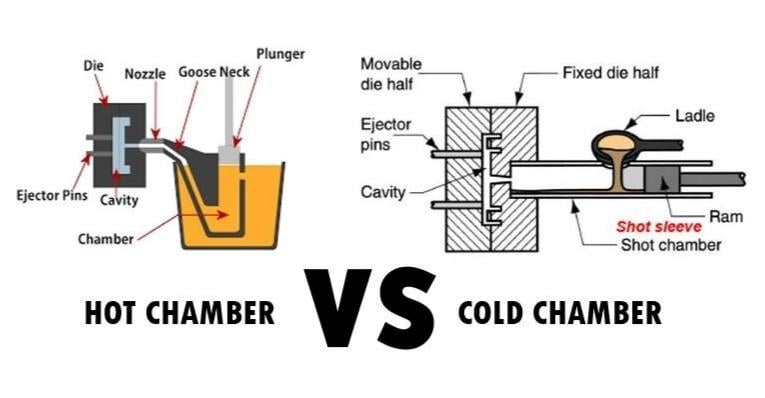
Two primary process variants are used:
Both methods inject molten zinc alloy into precision dies under controlled parameters to ensure repeatable quality.
Process selection depends on:
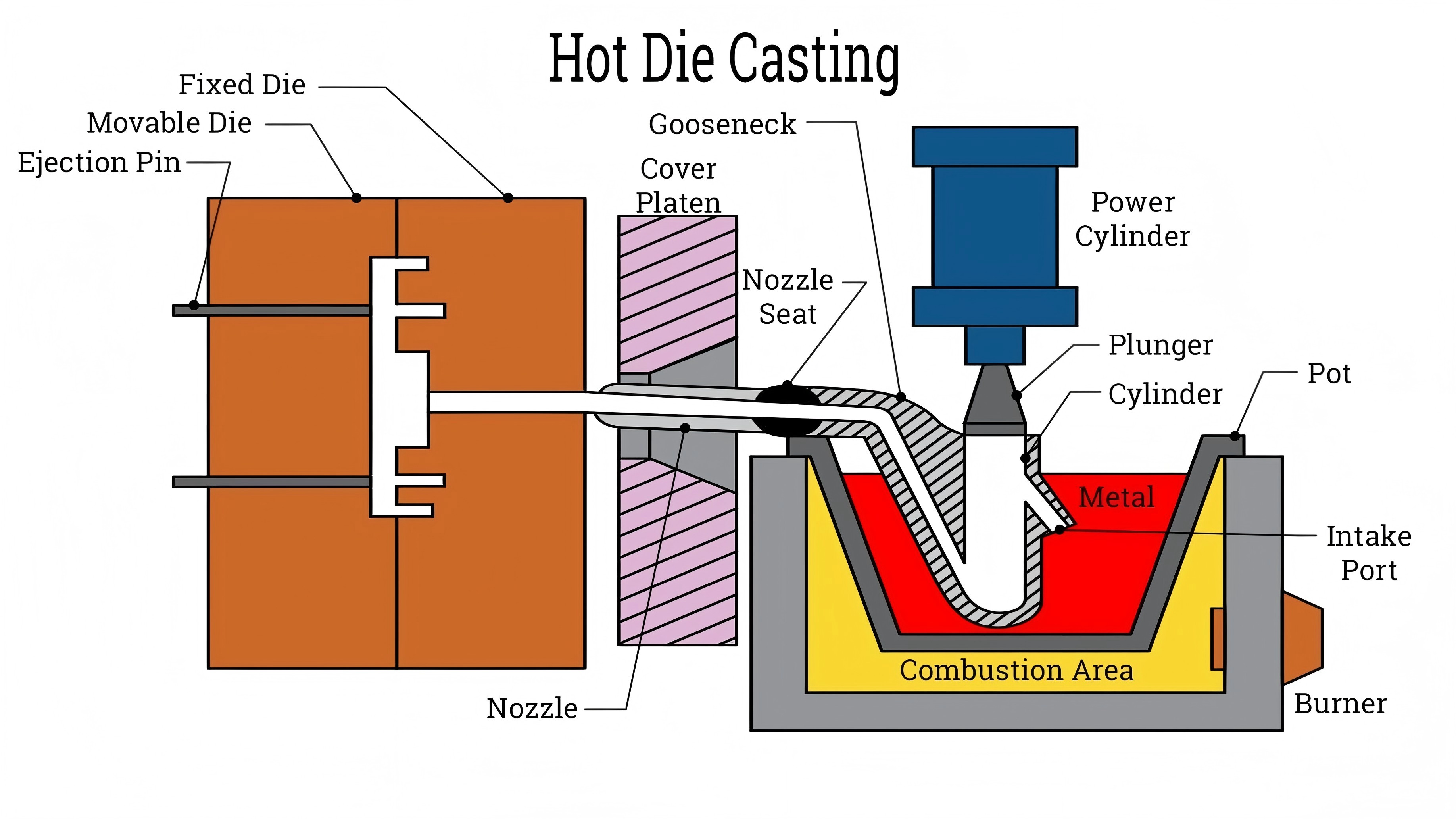
Hot chamber casting is the dominant method for conventional zinc alloys due to zinc’s low melting temperature and low corrosivity.
In this system, the injection plunger is submerged in molten metal. When activated, the plunger forces metal through a gooseneck system into the die cavity.
Typical characteristics:
Advantages include high production efficiency, minimal material waste, and stable repeatability.
Cold chamber casting is used for alloys containing higher aluminum content or for larger-format components.
Molten metal is ladled into a shot sleeve before being injected into the die cavity. While cycle times are slightly longer, this process offers greater flexibility in alloy selection and part size.
Cold chamber is suitable for:
Zinc alloys are known for low shrinkage (~0.6%) and strong dimensional stability. Components maintain geometry under sustained mechanical loads with minimal creep at room temperature.
For optimal manufacturability:
These guidelines support stable filling, reduced porosity, and consistent production yield.
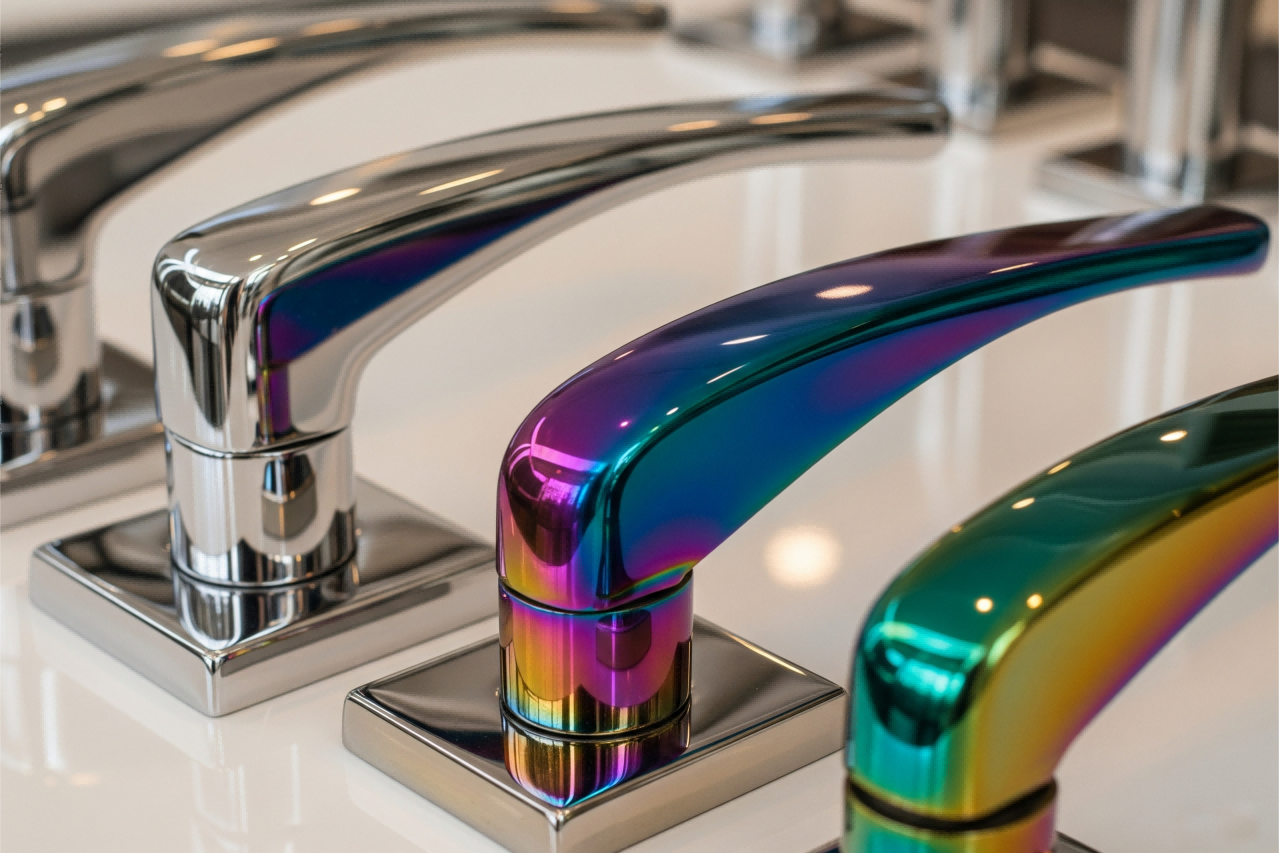
Zinc castings exhibit smooth as-cast surfaces suitable for:
Surface roughness (Ra) is typically 0.8–1.6 µm directly from the mold, reducing finishing preparation requirements.
Even with controlled processes, certain defects may occur:
Caused by trapped gas or shrinkage.
Mitigation: Vacuum assist, optimized gate design, uniform wall thickness.
Incomplete fusion of metal fronts.
Mitigation: Adjust injection speed and thermal balance.
Excess material at parting lines.
Mitigation: Maintain clamping force and die alignment.
Gas expansion during finishing.
Mitigation: Improve venting and surface preparation.
Proper DFM analysis significantly reduces defect risk.
Zinc die casting provides:
For small to medium precision components, total production costs may be 10–30% lower than aluminum casting due to reduced tooling wear and secondary machining.
Zinc casting is widely used in:
Its dimensional stability and surface quality make it suitable for automated assembly environments.
This process is ideal when:
When evaluating suppliers, consider:
Early engineering collaboration reduces long-term production risks.
Zinc offers better fluidity and thinner wall capability. Aluminum is lighter and performs better at elevated temperatures. For small precision parts, zinc typically offers longer tool life and lower total cost.
Zamak 3, Zamak 5, Zamak 2, and ZA-8 are widely used, each balancing strength and castability.
General tolerances of ±0.05–0.10 mm are typical, depending on geometry and die configuration.
Yes. Zinc is fully recyclable without degradation of mechanical properties, and process scrap is routinely reused.
Tooling: 4–8 weeks
Production: 1–3 weeks depending on volume
All technical data in this article aligns with:
This content has been reviewed by senior die casting engineers with over 15 years of manufacturing experience in precision zinc alloy components.

 EN
EN

